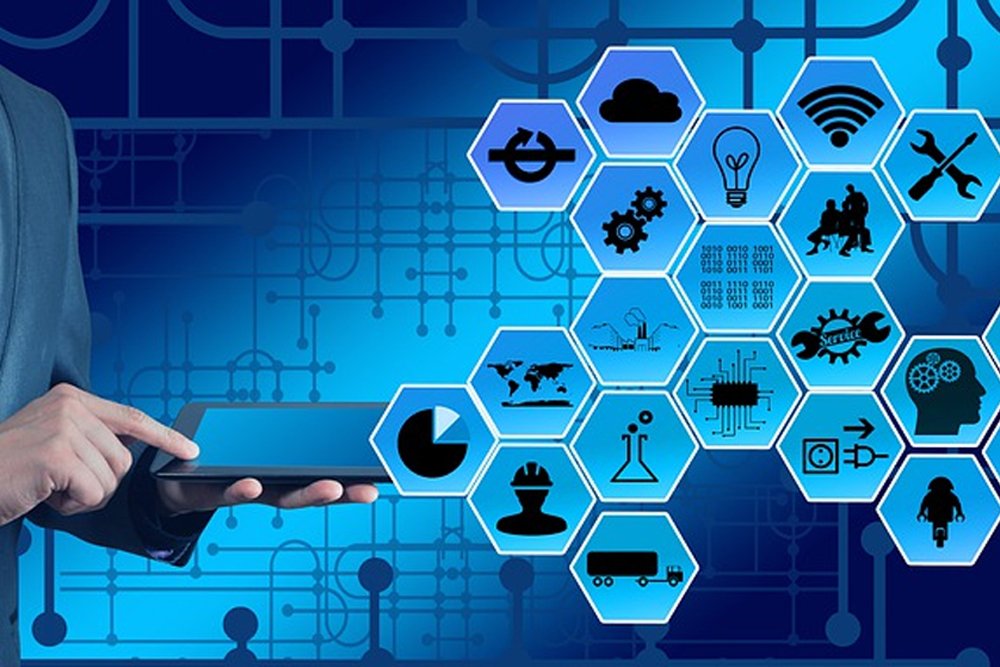
25/03/2016 · Lesson Summary. Technology is the use of scientific knowledge for practical purposes or applications, whether in industry or in our everyday lives. It …technology, the application of scientific knowledge to the practical aims of human life or, as it is sometimes phrased, to the change and manipulation of the human environment. The subject of technology is treated in a number of articles. For general treatment, see …The meaning of TECHNOLOGY is the use of science in industry, engineering, etc., to invent useful things or to solve problems. See more meanings of technology. How to …22/02/2018 · Basic technologies, as the name implies, are the basis of our industry. They have not only been tested in theory and in the laboratory but have also been put to use for years. Basic technologies include combustion engines, for example, as well as transistors and the power grid. Basic technologies are of utmost importance for industry and the economy.At the heart of every piece of technology is automation. Technology automates the most complex of processes, be it in communication, education, medicine or any other industry. With the application of technology, critical and time-consuming …05/08/2021 · Information technology (IT) is the use of any computers, storage, networking and other physical devices, infrastructure and processes to create, process, store, secure and exchange all forms of electronic data. Typically, IT is used in the context of business operations, as opposed to technology used for personal or entertainment purposes.Information technology (IT) is the use of computers to create, process, store, retrieve, and exchange all kinds of electronic data and information.IT is typically used within the context of business operations as opposed to personal or entertainment technologies. IT is considered to be a subset of information and communications technology (ICT). An information technology …
technology is a key partner because it also helps to deliver its innovations and improve the quality of life for members who are eligible for benefits.
With a $5 per capita increase for each $500,000 in national sales, Canada has seen its average per capita sales increase from $1.45 in 1979 to $7.25 by 2012, according to federal data from Statistics Canada. This level of growth should be the largest increase since 1975 and would have been much larger if Canada were to continue to provide more opportunities to Canadians who otherwise would be unable to do so. Despite this fact, this growth is not the only indication of Canada's strength in the global economy. While Canada does see a slight slowdown in U.S. growth in recent years, even with higher growth in the United States, it still faces challenges.
With GDP growth of 13.6 percent from 1999 to 2012, Canada could potentially experience a growth rate of 9.9 percentage points when compared across several major emerging economies. This growth should, however, be offset by a decline in gross domestic product for many countries, as the share of Canada's population that is non-expansive relative to that of the U.S. relative to the rest of the developed world rose in the second quarter of this year, although the decline in gross domestic product (GDP) was not statistically significant (unpublished figures). The decline in exports and imports will also depend on whether Canada's large population has improved, or

























Technology BooksFuture Computer TechnologyTechnology TypesPower TechnologyTechnology SafetyTechnology WorldSecurity TechnologySimple TechnologyTechnology Integration2050 TechnologyTechnology TeacherTechnology LifeTechnology ImpactTechnology SignIntegrating Technology


Tidak ada komentar:
Posting Komentar